Up the road from where I live, wild asparagus grows in abundance. Every May, I forage the ditches on the edges of farm fields and pick a few pounds of it.
This wild asparagus is plump and tender, with lush green spears and soft pink scale leaves. It’s almost too pretty to eat, but I consume it with gusto. As much as I appreciate this vegetable, it pales compared to how much it was revered centuries ago.
Once a delicacy only for royalty and the upper class, asparagus had such a devoted following that specialized tools were invented solely for serving it, including fancy tongs and ornate silver servers, which were de rigéur on the dining tables of the wealthy.
These asparagus-specific serving pieces are highly collectible today, and some, particularly silver examples, can sell for thousands of dollars.
A KINGLY VEGETABLE
Though asparagus was cultivated and consumed by the ancient Romans, it wasn’t introduced to England until the 16th century and didn’t become widely popular until about two centuries later. The vegetable, whose peak season is spring, was valued by royalty and the wealthy as a great delicacy and an exotic accompaniment to other food, as well as a star on its own: asparagus pudding, asparagus and eggs, and boiled asparagus on toast were popular dishes.
France’s King Louis XIV was such a fan that he had his gardener build a greenhouse for it so he could enjoy “the food of kings” year-round. It’s been reported that Queen Victoria also enjoyed asparagus and ate huge amounts each spring.
In America, Thomas Jefferson became an advocate for asparagus after his time as minister to France from 1785 to 1789. He grew it in his garden at Monticello and noted in his journal his joy at the arrival of asparagus season.
The reverence for asparagus fortuitously coincided with the large-scale production of quality porcelain and silver tableware, and specialized serving pieces were produced on both sides of the Atlantic for picking up the long, delicate spears and serving them gracefully.
Devoting silverware solely to serving one vegetable is not surprising when you consider that during those eras and through the early 20th century, the wealthy elevated dining to a highly ritualized art form. Tables were set with elegant plates, platters, and other dishware, along with gold or sterling silverware, and it was the norm to have specialized utensils for serving every traditional food. It would have been uncouth to serve asparagus with a utensil meant for serving tomato slices.
People also ate asparagus and other fruits and vegetables only when they were in season, typically daily for weeks at a time, so an investment in specially designed serving tools for specific foods was deemed practical.
SILVER SERVERS
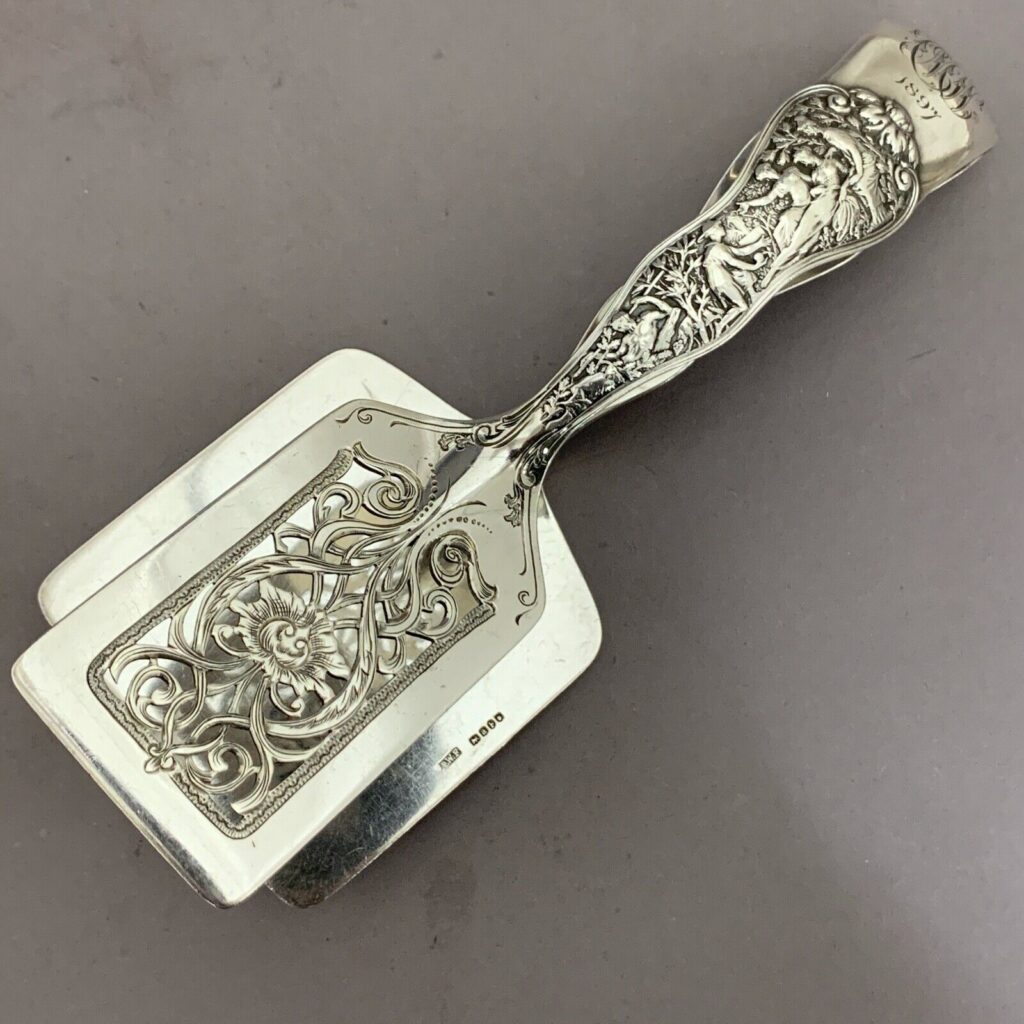
Designed to be both functional and aesthetically pleasing, asparagus servers symbolized class and manners. These sophisticated devices helped dinner guests transfer pieces of asparagus—which could have been unwieldy using a regular fork or spoon—from serving platters onto dinner plates without faux pas.
Often included in a comprehensive flatware service, these servers usually had decorative flourishes like ornately designed handles and terminals with pierced and scrolled designs.
The earliest asparagus pieces, produced in early 18th-century England, were silver scissor-like tongs with long, thin handles, and sprung U-shape examples similar to sugar tongs. Toward the end of the century, simple two-sided open-ended box servers came into vogue and could be used to place a bunch of cooked asparagus neatly on a plate.
Given the Victorians’ reverence for decorating their dining tables with beautiful wares, British and American silver companies, including Gorham and Tiffany, continued expanding the range of asparagus utensils throughout the 19th century. These pieces included servers with flatter, wider shapes than early tongs—similar to miniature stylized shovels—to allow the transfer of multiple spears at once.
Also developed were smaller individual tongs for each diner to serve their own portions of asparagus.
PORCELAIN SERVERS
Not to be left out, pottery and porcelain companies also made an array of serving pieces in homage to asparagus, especially during the Industrial Revolution, when the vegetable became more accessible, and pottery went from being a village craft to being mass-produced.
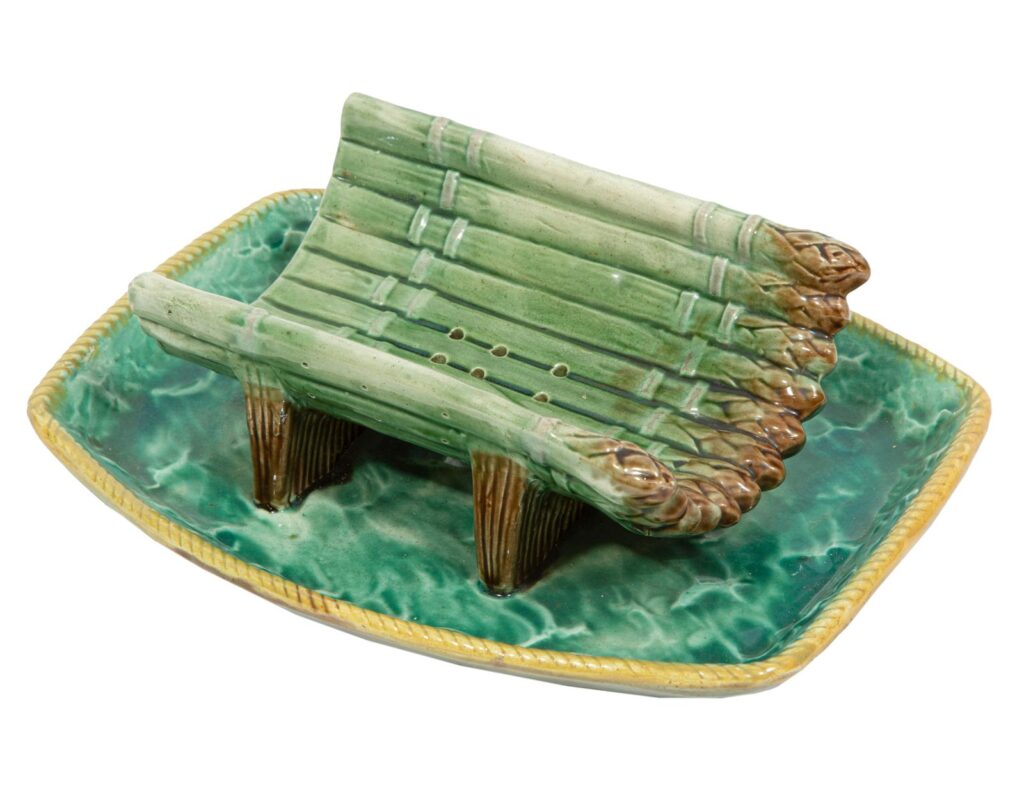
Some of the most popular pieces were majolica servers. The mass production of majolica made it possible for the middle class to not only eat asparagus that was previously reserved for the affluent but also emulate an extravagant lifestyle since a set of majolica plates was much more affordable than the gilded porcelain sets favored by the rich.
With its bright colors and glazes, majolica was the perfect companion to the vegetable, and French and other European potteries produced a seemingly endless variety of pieces celebrating asparagus, including cradles, platters, individual plates with a sauce well for butter, pitchers, and trays.
COLLECTING ASPARAGUS SERVERS
Today, there is a legacy of surviving asparagus servers in various forms and materials found at auctions, antique stores, flea markets, yard sales, and online marketplaces in all price ranges.
Silver servers are the most valuable and pricey, and collectors are willing to pay more than $1,000 for pieces by prominent makers, like American silversmith manufacturers Gorham and Reed & Barton. Over the past three years, WorthPoint’s database generally shows that silver asparagus servers have sold between $15 and $7,995 for a rare Tiffany asparagus fork that sold in 2024.
Collectors also prize naturalistic and whimsical majolica servers. Each hand-painted piece is one-of-a-kind and available in a range of designs and colors. Over the past several years, the database shows that these pieces have sold between $5 and $565.
Esoteric yet charming antique asparagus serving pieces reflect the history and refinement of dining practices and etiquette. While modern dining may not need such specialized utensils as centuries ago, they can still hold their own at the table for serving the food of kings.
Adina K. Francis has been a writer and editor in the antiques and collectibles field for more than twenty years. She has a bit of an obsession with the Victorians and thinks that dogs are one of life’s greatest gifts.
WorthPoint—Discover. Value. Preserve.
Credit: Source link