Whether you are a veritable carpenter or an occasional handyman, you undoubtedly have a cache of tools occupying a corner of your basement or garage. If it’s time to pare down your pliers and sort through your screwdrivers, read on to get some tips and tools for sorting all those S.O.S. (Surplus Old Stuff): Tools.
Pegboards & Julia Child
Everyone has tools, but some have more than others. My ideal tool collection consists of a carefully curated set of hand tools and accessories, with just a few power tools (maybe a drill and a jigsaw). I’d have room for a few extras like a soldering iron and the invaluable “miniature tool set” complete with a tiny screwdriver and tweezers. Still, in the interest of conserving precious basement or garage space, I’d pass on the larger table saws and drill presses. I do not use them enough to warrant having them constantly on hand.
On the flip side, those small hand tools like needle-nose pliers often come in handy around the house and in my work as an antique dealer. They don’t take up a lot of space, and in my dreams, one day, I will have a pegboard mounted on the back basement wall with outlines of each tool on it so everyone knows where things go, just like Julia Child did with her pots and pans.
For now, however, my tool collection constantly rotates, depending on what comes through the door. We have cheap tools that come with unassembled furniture, tools handed down through the family, and miscellaneous tools I pick up at estate sales. Each of these categories of tools has its place on the tool bench, but it’s essential to pick and sort through the new and old examples before you run out of space.
Tins Full of Allen Wrenches
Do you have a bunch of screwdrivers with cheap plastic handles in every color of the rainbow or a tin full of Allen wrenches that “may come in handy one day?” Then you are the victim of buying inexpensive furniture from big box stores like Ikea, notorious for including a poor quality tool or two to assemble their poor quality goods.
At the end of the day, you can ask yourself: How many Allen wrenches do you need? The quick answer is “one set.” I like the ones that come in a storage sleeve to hold them all together, like this classic Craftsman Allen wrench set, but the single-piece ones that fold up like a Swiss Army knife are top-notch as well.
Clamp Collections & Too Many Table Saws
How about the tools that get handed down through the family? Handed-down is perhaps my favorite category of S.O.S. (Surplus Old Stuff): Tools, as we have gotten some treasures this way. We have a coffin-shaped wooden toolbox handed down through the generations with an old family name engraved on the top, which today is best used as a piece of furniture rather than for its original storage function.
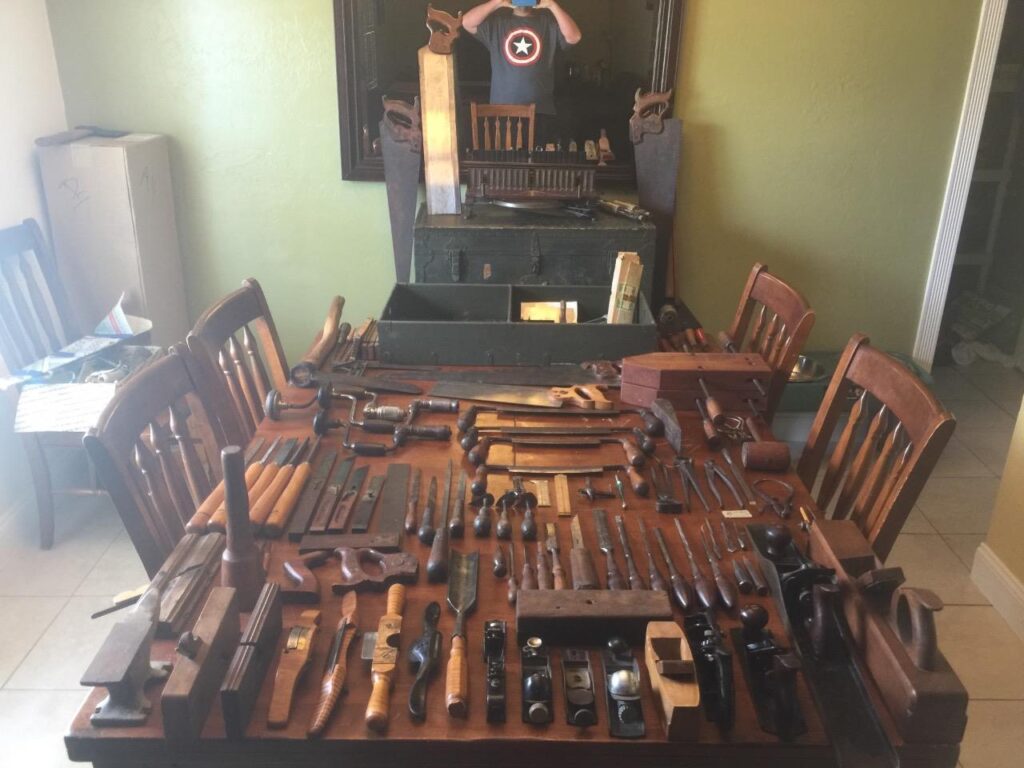
We have antique wooden planes to the moon and back, each lovingly seasoned by the fine working hands of old grandpas and uncles. I can always use a good clamp, and believe it or not, I have some very old six-foot-tall cast iron clamps that come in handy for furniture repairs. I use the smaller clamps more often, but I enjoy being the proud owner of an antique clamp collection in all shapes and sizes that has been in the family for quite a while.
Finally, what I am not a fan of are the occasional giant shop tools that, for some reason, get dropped off at our house, sometimes by well-meaning relatives but sometimes just by folks who think we “could get some use” out of their, for example, thirty-year-old table saw. We’ve ended up with a couple of those, and while they have maybe been used once or twice, their age makes me so nervous I’d rather not go near them. They eventually end up “free on the curb” for someone else to take their chances with.
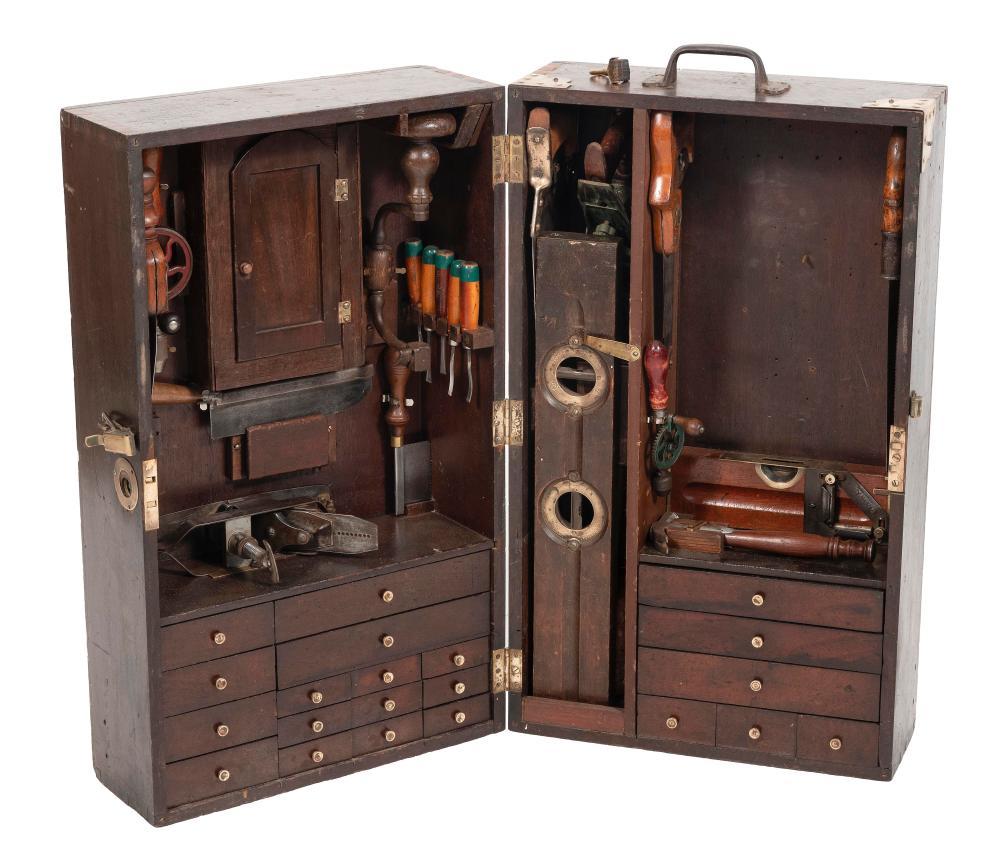
Lastly, how about the tools you pick up at estate sales? I love this category as well, as I often find “upgrades” for my own tools or find antique treasures to resell. It’s easy to spot the upgrades, but if you are looking to resell antique or estate-find tools, there are several things to look for, including condition. Excellent condition always helps with flipping old tools, and it is also advisable to steer clear of potentially dangerous ones (for instance, an old wooden tool that was repainted 50 years ago may well be covered in lead paint).
Keep an eye out for the coveted patina of unpainted wooden tools, which shows their years of use by past woodworkers. Some old wooden tools have marks, including the brand, patent number, year of manufacture, and even the owner’s name. All of these identifiable characteristics add value to vintage tools.
Some of the most valuable antique tools to look out for are planes, levels, and scrapers. Planes, in particular, can often fetch big bucks on the secondary market, depending on the model.
Lastly, watch out for elaborately decorated hand tools, especially Victorian-era ones. If you find any of these as you sort through your tools and if you are ready to part with them, they undoubtedly will reach an excellent “hammer price” at auction!
Amy Moyer is the proprietor of Antmuffin: Art, Antiques & Collectibles. She holds a B.A. in Visual Arts from Brown University and lives in Boston.
WorthPoint—Discover. Value. Preserve.
Credit: Source link